Skip to content


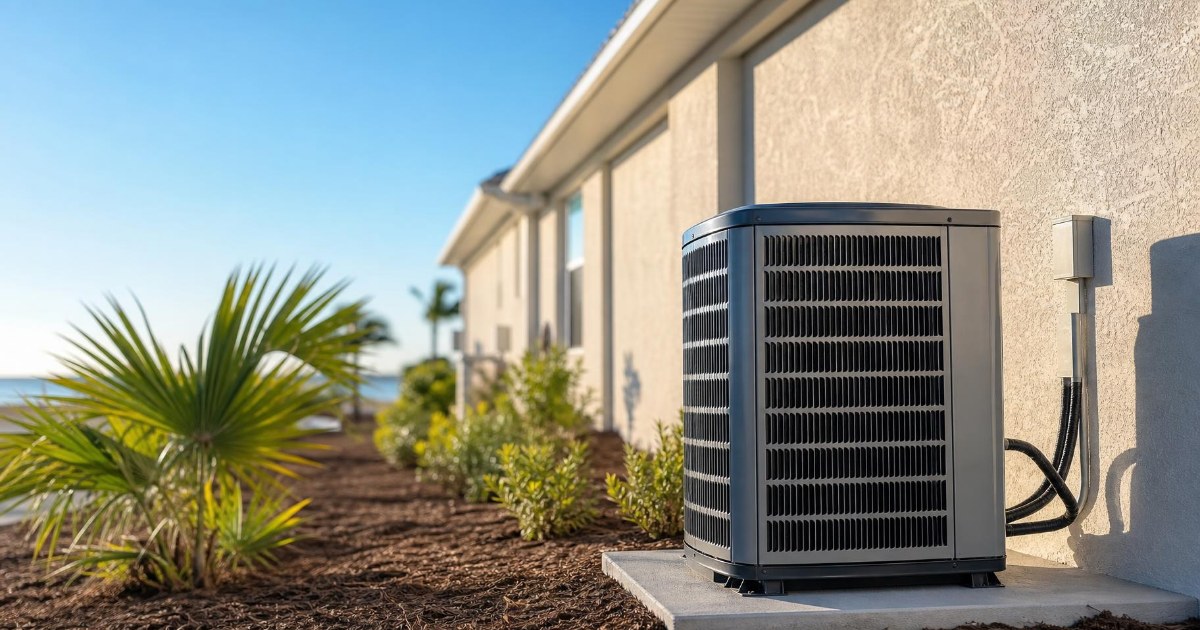
On most central air systems, the outside unit is called the condenser unit. You may also hear it called the condensing unit, the outdoor unit or the AC condenser. Knowing the name helps in three everyday moments: describing a problem to a technician, making sense of a repair quote, and caring for the unit between service visits. A homeowner who says "the condenser fan stopped spinning" gives a technician a faster start than one who says "something is wrong outside." This post covers what the unit is called on each type of system, what it does, what sits inside the cabinet, and how to look after it in the Corpus Christi climate.
What Is the Outside AC Unit Called?
The most common answer is condenser unit. Technicians also say condensing unit, and many homeowners say outdoor unit or AC condenser. Some people call the whole box "the compressor." The compressor is one part inside the cabinet, a pump that moves refrigerant through the system, so the cabinet as a whole carries the name condenser unit.
A condenser unit is the outdoor half of a split system. On a split system, the outside cabinet works with an indoor evaporator coil that sits on top of a furnace or inside an air handler, and federal guidance describes these systems as an outdoor unit that holds the condenser and compressor joined to an indoor unit. This is the setup in most Coastal Bend homes with central air.
The name shifts a little on other systems. If your home has a heat pump, the outside unit is the heat pump itself, and it keeps running in winter because in cold weather it moves heat from the outdoors into the home. A packaged unit holds every component in one outdoor cabinet, with ducts running from that cabinet into the house. A ductless mini-split has a smaller outdoor unit that feeds one or more wall-mounted indoor heads.
You can work out which one you have in a few minutes. Look at the data plate on the side of the outdoor cabinet, which lists the manufacturer, the model number and the type of equipment. Think about whether the outside unit runs when the thermostat is set to heat, since a heat pump does and a cooling-only condenser does not. Then look for a separate indoor unit. A furnace or air handler in a closet or attic points to a split system, a single cabinet with ducts entering the home points to a packaged unit, and wall-mounted heads point to a mini-split. Birdwell AC & Heating works on all four types.
What Does the Condenser Unit Do?
An air conditioner cools by moving heat. It does not make cold air from nothing. Inside the house, the evaporator coil absorbs heat from the indoor air into the refrigerant. That refrigerant travels through the line set to the outdoor unit, where the condenser releases the heat outside. The cooled refrigerant then returns indoors to pick up more heat, and the cycle repeats for as long as the thermostat calls for cooling.
The outdoor unit sits outside for two reasons. The heat pulled from your home needs somewhere to go, and the open air gives it room. The compressor and the big fan are also loud, and keeping them outdoors keeps that sound out of your living space.
Many homeowners believe the outside unit pulls fresh air into the house. The unit exchanges heat with the outdoor air, and the air inside your home stays inside, moving through the return vents, the indoor coil and the supply ducts. The fan on top pulls outdoor air across the condenser coil only to carry the heat away, and that air leaves through the top of the cabinet.
Seeing the unit this way makes a repair conversation easier. Every part inside the cabinet either moves refrigerant, releases heat, or powers those two jobs.
Outdoor AC Unit Parts and What Each One Does
Pop the top and the side panels off a condenser unit and you find a short list of parts. Here is what each outdoor AC unit part does, in plain terms.
Compressor
The compressor is a pump. It takes in the low-pressure refrigerant vapor coming back from the indoor coil, pressurizes it, and pushes it through the system. Pressurizing the vapor raises its temperature, which lets the condenser release the heat into the outdoor air. It is the hardest-working part in the cabinet.
Condenser coil and fins
The condenser coil is the copper or aluminum tubing wrapped around the inside of the cabinet. Hot refrigerant gives up its heat here and turns back into a liquid. Thin metal fins cover the tubing and spread the heat out to the passing air. Those fins bend easily, and bent or clogged fins slow the heat release.
Condenser fan and motor
The fan sits on top of the cabinet. Its motor spins the blades, which pull air across the coil and push the heat up and away from the unit. When the fan stops, the heat has nowhere to go and the system struggles.
Capacitor and contactor
These electrical parts get the unit going. The capacitor stores a charge that gives the compressor and fan motors the jolt they need to start. The contactor is a switch that closes when the thermostat calls for cooling and opens when the house reaches temperature. Both live behind the access panel near the wiring.
Refrigerant lines and electrical disconnect
Two insulated copper lines, called the line set, connect the outdoor unit to the indoor coil. The larger one is usually wrapped in foam. A service disconnect box is mounted on the wall nearby, and it lets a technician cut power to the unit before working on it.
Signs the Outside Unit Needs Attention
You can notice a lot from the yard and from the vents. Each sign usually points toward one of the parts above.
A fan that is not spinning while the system runs often involves the fan motor or the capacitor. Humming or clicking without the unit starting points to the capacitor or the contactor. Grinding or rattling can come from worn fan motor bearings, loose panels, debris inside the cabinet, or the compressor, so it deserves a prompt look. Ice on the refrigerant lines tends to trace back to restricted airflow or a refrigerant problem, and oily residue near the fittings can mean a refrigerant leak at a connection. Warm air from the vents may involve the compressor, the refrigerant charge or a dirty coil, and a system that turns on and off frequently can involve the contactor or a coil that cannot shed heat.
Birdwell AC & Heating technicians diagnose and repair air conditioning problems like these across Corpus Christi, checking airflow, electrical components, motors, capacitors and coils before recommending a fix.
Repair usually makes sense when the system is otherwise dependable and its major components are in good condition. Replacement becomes worth considering when an older system needs frequent repairs or has major component failures. If replacement comes up, the indoor and outdoor units are designed to work as a matched pair, so the two are usually chosen together.
Caring for Your Outdoor Unit on the Gulf Coast
Care for the outdoor unit splits into what you handle and what a technician handles. Homeowners can check or replace the air filter and keep grass, leaves, dirt and debris away from the condenser. Clean filters can lower an air conditioner's energy use by 5 to 15 percent, and a clear area around the cabinet lets air move freely through the coil. Electrical, refrigerant, mechanical and internal inspections belong to a qualified HVAC professional.
The Gulf adds its own wear. Properties near the water can see salt and coastal exposure that contributes to corrosion on outdoor HVAC components, and Corpus Christi's long cooling season puts extra running hours on the unit each year. Routine inspections let a technician look for coil buildup, corrosion and restricted airflow before they affect cooling.
A maintenance visit from Birdwell AC & Heating covers the outdoor unit directly. The technician inspects and cleans condenser components, checks the evaporator and condenser coils, inspects refrigerant levels, tests electrical connections, and checks capacitors and controls. Clean coils matter because dirty coils make the system run longer, which raises energy costs and wears the equipment.
Birdwell recommends professional AC maintenance at least once a year, ideally before the period of heaviest summer use. The Comfort Club maintenance options on the Birdwell homepage give homeowners a regular way to keep that visit on the calendar.
Getting Your Outside Unit Checked in Corpus Christi
If your outside unit is showing any of the signs above, or it is due for its yearly check, Birdwell AC & Heating services central air conditioners, heat pumps, packaged systems and ductless mini-splits across Corpus Christi and the Coastal Bend. The next step is to request service online, and a technician will take it from there. Whether the need is a repair or a routine visit, the team will look at the condenser, name what they find, and explain your options before any work begins.